


Why Do Low-Voltage Cables Need to Avoid Lightning Strikes? An Important Line of Defense for Electrical Safety
2025-12-26 From: Tianjin Huben Cable Co., Ltd. Browsing times:56
In low-voltage power supply systems, lightning protection is often mistakenly regarded as an "exclusive requirement" for high-voltage lines, and the lightning risk of low-voltage cables is often ignored. In fact, both low-voltage cables laid outdoors (such as community power distribution lines, outdoor photovoltaic low-voltage cables) and low-voltage cables close to external walls and roofs in indoor wiring are at risk of lightning . The strong current and high voltage generated by lightning can invade low-voltage cables through various channels, damage cable insulation, destroy electrical equipment, and even cause serious safety accidents such as fires and electric shocks. This article will deeply analyze the core reasons why low-voltage cables need to avoid lightning , the specific hazards caused by lightning , and full-scenario lightning protection measures, providing practical safety references for construction personnel, operation and maintenance personnel, and ordinary users.
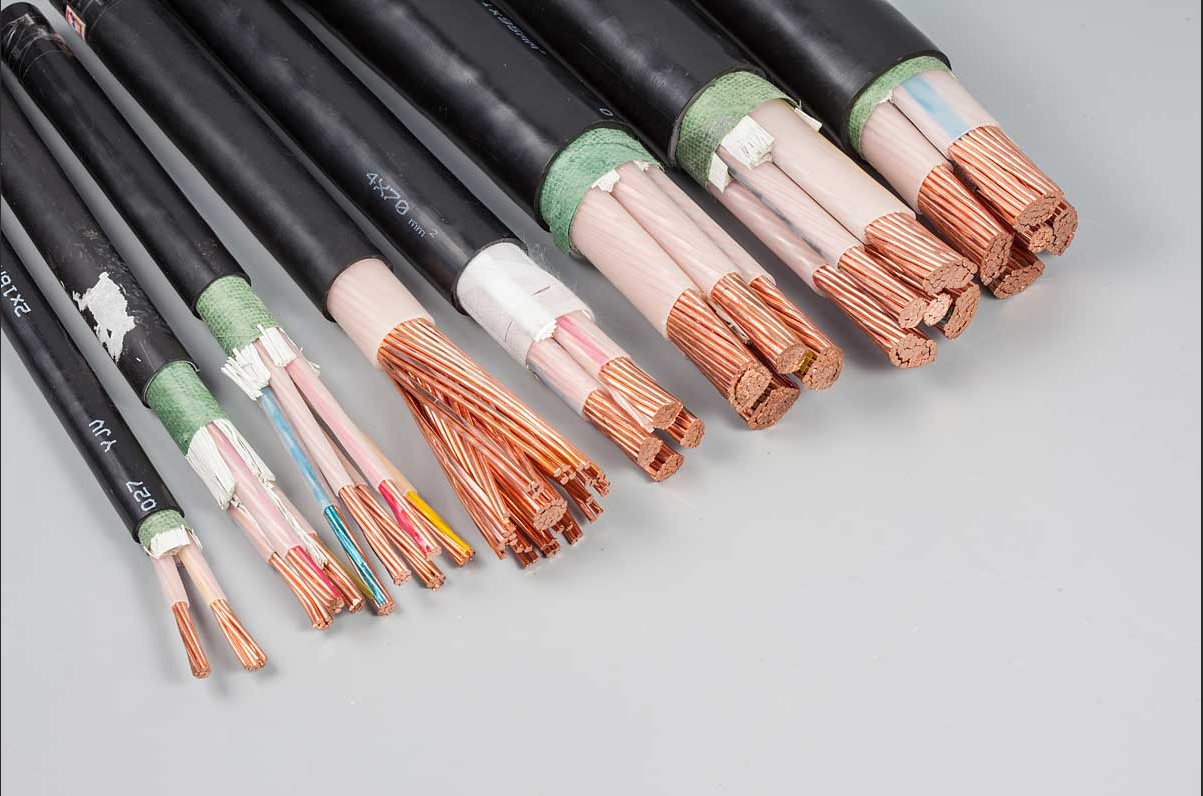
I. Core Reason: Lightning Energy Is Highly Destructive, and Low-Voltage Cables Bear It
A lightning is essentially a strong current discharge phenomenon formed by the release of cloud charges. The current of a single lightning can reach tens of kiloamperes or even hundreds of kiloamperes, and the accompanying voltage can be as high as millions of volts. The designed voltage withstand level of low-voltage cables is usually 450/750V, with a thin insulation layer, and the conductor current-carrying capacity is only suitable for low-voltage electricity demand, which is completely unable to withstand the extreme energy impact caused by lightning .
The hazards of lightning to low-voltage cables are mainly generated through two channels: first, direct lightning,that is, lightning directly hits outdoor low-voltage cables or their supports, and the instantaneous strong current and high voltage directly break down the cable insulation layer and damage the conductor; second, induced lightning , which is a more common form. When lightning hits buildings, trees, or high-voltage lines near the cables, it will generate a strong electromagnetic pulse around it, inducing high-voltage surges in the low-voltage cables through electromagnetic induction, which then invade the cable interior and connected electrical equipment, causing indirect damage. Both direct and induced lightning will break the safety balance of the low-voltage power supply system and trigger a series of faults.
II. 4 Specific Hazards of Lightning Strikes, Threatening Power Supply Safety and Property Safety
After a low-voltage cable is struck by lightning, the hazards will quickly spread to the entire low-voltage power supply system, not only damaging the cable itself but also posing multiple threats to electrical equipment and personal safety. The specific manifestations are as follows:
1. Cable Insulation Breakdown, Causing Short Circuits and Fires
The high-voltage surge generated by a lightning will instantly exceed the withstand limit of the low-voltage cable's insulation layer, leading to insulation breakdown, carbonization, and even insulation burning. After the insulation layer is damaged, the live wire, neutral wire, and ground wire inside the cable will directly contact, triggering a short-circuit fault. The arc temperature generated by the short circuit is extremely high, which can ignite the cable sheath and surrounding combustibles (such as wall decoration materials, outdoor vegetation), and then cause a fire accident. Especially in enclosed or semi-enclosed spaces such as outdoor cable trenches and indoor ceilings, fires spread quickly and are difficult to put out, easily causing heavy property losses.
2. Damage to Electrical Equipment, Increasing Maintenance Costs
The voltage surge generated by a lightning will invade the power distribution system through low-voltage cables and flow to terminal equipment such as household appliances, commercial equipment, and industrial control equipment along the lines. Most electronic components of low-voltage electrical equipment (such as chips, capacitors, and circuit boards) have extremely weak voltage withstand capacity and cannot withstand the impact of lightning surges, resulting in faults such as component burnout and circuit board breakdown, leading to equipment scrapping. For example, air conditioners, refrigerators, and TVs in homes, cash register systems and monitoring equipment in commercial places, and frequency converters and sensors in industrial scenarios may all be damaged by lightning surges. Equipment maintenance or replacement requires a lot of costs, and power outages will be caused at the same time, bringing inconvenience to production and life.
3. Generation of Induced Voltage, Causing Electric Shock Accidents
During a lightning , the metal sheath, shielding layer (if any), or conductor of the low-voltage cable may induce high voltage. Even if the cable is not directly damaged, these induced voltages may be transmitted to parts accessible to the human body through equipment casings and metal supports. If operation and maintenance personnel carry out maintenance without investigating potential safety hazards after a lightning , or ordinary users touch equipment and cables with induced voltage, high-voltage electric shock injury is likely to occur, with serious consequences. In addition, after a lightning causes damage to the cable insulation, the exposed conductor will also directly trigger the risk of leakage and electric shock.
4. Damage to Power Supply Stability, Leading to Large-Area Power Outages
Cable short circuits and equipment damage caused by lightning will trigger the tripping of protective devices in the power distribution system (such as air switches and fuses). If the fault scope is large, it may also damage core power distribution equipment such as transformers and distribution cabinets, leading to large-area and long-term power outages. For commercial places and industrial plants, power outages will directly affect production and operation, causing economic losses; for residents' lives, power outages will affect daily electricity demand, and even affect the normal operation of key electrical appliances such as refrigerator refrigeration and heating equipment.
III. Low-Voltage Cable Scenarios Prone to Lightning Strikes, Key Prevention Is Essential
Not all low-voltage cables are at the same risk of lightning . Low-voltage cables in the following scenarios are more likely to be affected by lightning or lightning surges and require key prevention:
- Outdoor open-air laying scenarios: such as outdoor power distribution lines in communities, low-voltage cables of outdoor photovoltaic power stations, low-voltage irrigation lines in rural fields, etc., which are directly exposed to lightning environments and are prone to direct or induced lightning ;
- Scenarios close to tall buildings/structures: such as low-voltage cables close to high-rise buildings, chimneys, billboards, and communication towers. These tall objects are prone to attracting lightning, and the induced surges generated by lightning will invade the system through the cables;
- Scenarios crossing open areas: such as low-voltage cables crossing squares, playgrounds, farmland, and other open areas. There are no obstacles around, and lightning is likely to directly hit the cables or their laying supports;
Indoor scenarios close to external walls/roofs: such as wiring inside external walls of buildings and low-voltage cables connected to roof equipment (such as air conditioning outdoor units). Lightning may be conducted to the cables through walls and roofs, causing surge invasion.
IV. Full-Scenario Lightning Protection Measures to Scientifically Avoid Lightning Strike Risks
In response to the lightning risk of low-voltage cables, a full-chain protection measure of "external interception, internal diversion, and equipment protection" should be adopted, and multi-dimensional prevention should be carried out from cable laying, system configuration to daily operation and maintenance. The specific measures are as follows:
1. Optimize Laying Methods to Reduce Direct Lightning Strike Effects
- Prioritize underground laying: Outdoor low-voltage cables should be laid underground as much as possible. Use the shielding effect of soil to weaken lightning-induced surges and reduce the probability of direct lightning ; the laying depth of underground cables should not be less than 0.7 meters. Yellow sand or fine soil can be laid in the cable trench to avoid contact with sharp objects, and anti-corrosion treatment of the cable sheath should be done well;
- Avoid open-air overhead laying: If overhead laying is necessary, the overhead distance should be shortened as much as possible, away from tall buildings, trees, and high-voltage lines; the supports of overhead cables should be properly grounded, the height of the supports should not be too high, and a simple lightning rod or lightning strip can be installed above the supports if necessary;
- Strengthen indoor wiring protection: Indoor low-voltage cables close to external walls and roofs should be laid through metal pipes, and both ends of the metal pipes should be properly grounded to block the invasion of lightning surges by using the shielding effect of the metal pipes.
2. Configure Lightning Protection Devices to Divert Surge Energy
Install Surge Protectors (SPD): This is the core measure for lightning protection of low-voltage systems. Suitable low-voltage surge protectors should be installed at the incoming ends of low-voltage distribution cabinets and distribution boxes, as well as at the power input ends of outdoor equipment (such as photovoltaic inverters and air conditioning outdoor units). Surge protectors can quickly conduct when a lightning surge occurs, divert the surge energy to the ground, and avoid energy invasion into cables and equipment;
Improve the grounding system: The effectiveness of lightning protection depends on good grounding. The metal sheath, shielding layer, laying supports of the cable, as well as the surge protector and the metal shell of the distribution cabinet should be reliably grounded. The grounding resistance should be controlled below 4Ω (special scenarios can be adjusted according to specifications) to ensure that surge energy can be quickly and safely diverted to the ground;
Set up hierarchical protection: According to the cable laying distance and equipment sensitivity, adopt hierarchical lightning protection. Install a first-level surge protector at the main incoming end of the power distribution system, and install a second-level or third-level surge protector at the floor distribution box and equipment front end to gradually weaken the surge energy and improve the protection effect.
3. Daily Operation and Maintenance and Emergency Handling to Reduce Fault Losses
Regular inspection of lightning protection devices: Before the arrival of the thunderstorm season every year, conduct a comprehensive inspection of the lightning protection devices of low-voltage cables, including the status of surge protectors (whether they are invalid or damaged), the connection status of the grounding system (whether they are loose or rusted), and the integrity of the cable sheath. Timely rectify any problems found;
Emergency measures in thunderstorm weather: During thunderstorm weather, try to avoid approaching outdoor low-voltage cables, distribution cabinets, and other equipment; stop using precision electronic equipment and unplug the power plug to avoid surge invasion and damage to the equipment;
Investigation and maintenance after lightning: After a lightning , do not approach or maintain low-voltage cables and power distribution equipment immediately. Wait until the lightning is completely over, and professional personnel will check the cable insulation status and lightning protection device status. Restore power supply and use only after confirming that there are no potential safety hazards.
Related Articles More>>
- What are the common faults of power cables and how to prevent them? Power cable address will help you answer them
- Overseas Customers Visit Tianjin Huben Cable Co., Ltd. on Eighth Day of Lunar New Year for Business Cooperation
- What is the reason for the large price difference of power cables? How to choose power cable procurement?
- International Customers Visit Tianjin Huben Cable Co., Ltd. on Eleventh Day of Lunar New Year Seeking Win-Win Cooperation
