


What are the common faults of power cables and how to prevent them? Power cable address will help you answer them
2025-12-12 From: Tianjin Huben Cable Co., Ltd. Browsing times:29
Power cables are critical components of power distribution systems, and their reliable operation is essential for the stability and safety of the entire power network. However, due to factors such as material aging, improper installation, external damage, and environmental erosion, power cables are prone to various faults.Power cable address will help you answer them. Power cable address will help you answer themBelow is a detailed analysis of common cable faults and targeted prevention measures.
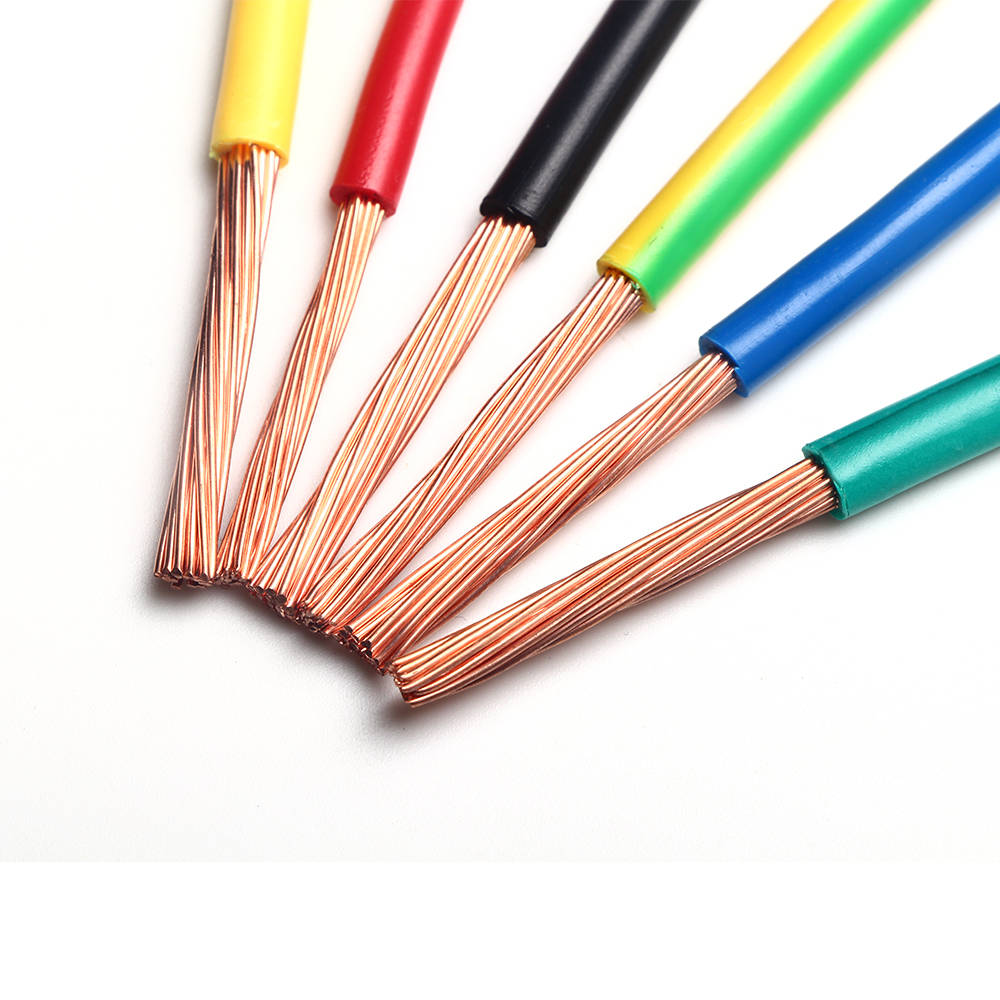
I. Common Fault Types of Power Cables
1. Insulation Failure
Insulation failure is the most prevalent cable fault, mainly manifested as insulation breakdown, insulation aging, and insulation moisture intrusion.
Insulation breakdown: Caused by overvoltage (such as lightning strikes or system internal overvoltage), excessive cable temperature due to overload, or defects in the insulation material during production. It leads to short circuits between conductors or between conductors and the ground, triggering power outages and even fire hazards.
Insulation aging: Long-term operation under high temperature, humidity, and chemical corrosion conditions accelerates the aging and embrittlement of the insulation layer, reducing its insulation performance and leading to leakage or short circuits.
Insulation moisture intrusion: Occurs when the cable sheath is damaged or cable joints are not sealed properly, allowing moisture to penetrate the insulation layer and cause insulation degradation, especially in underground or underwater laid cables.
2. Conductor-Related Faults
This type of fault includes conductor overheating, conductor breakage, and conductor oxidation.
Conductor overheating: Results from oversized load current exceeding the cable’s rated current-carrying capacity, poor contact at cable joints (causing contact resistance to increase and generate heat), or insufficient heat dissipation due to improper laying (such as overcrowded cable trays). Prolonged overheating not only damages the insulation layer but also softens the conductor, affecting its mechanical strength.
Conductor breakage: Caused by excessive external mechanical stress (such as pulling during construction, or vibration in long-term operation), corrosion of the conductor material, or fatigue fracture due to repeated thermal expansion and contraction. Conductor breakage directly leads to circuit interruption and power supply failure.
Conductor oxidation: For aluminum-core cables, oxidation of the conductor surface or joints forms an oxide film with high resistance, which increases the joint temperature and may even cause the joint to melt.
3. Cable Joint and Terminal Faults
Cable joints and terminals are weak points in the cable system, and their failure accounts for a large proportion of total cable faults.
Joint overheating and breakdown: Caused by poor crimping or welding during joint production, insufficient insulation wrapping, or the use of unqualified joint accessories. This leads to increased contact resistance, local overheating, and eventually insulation breakdown at the joint.
Terminal loosening and discharge: Loose terminal connections due to long-term vibration or improper installation cause spark discharge, which damages the terminal insulation and may lead to phase-to-phase short circuits.
4. External Mechanical Damage
External mechanical damage is a major cause of sudden cable faults, mostly caused by human factors during construction or operation.
Construction activities such as excavation, pile driving, and pipeline laying may accidentally break or crush underground cables, damaging the sheath and insulation layer and causing immediate short circuits or subsequent fault hidden dangers.
For overhead cables, damage from strong winds, falling branches, or external impacts can also lead to conductor breakage or insulation damage.
5. Corrosion-Related Faults
Cables laid in harsh environments are vulnerable to chemical or electrochemical corrosion:
Chemical corrosion: In chemical plants, coastal areas, or soil with high acid-base content, the cable sheath and metal armor are corroded by corrosive media, leading to sheath perforation and insulation damage.
Electrochemical corrosion: In soil with uneven electrical potential, galvanic corrosion occurs on the cable’s metal armor or lead sheath, causing local thinning or perforation of the metal layer and further endangering the internal insulation.
II. Prevention Measures for Power Cable Faults
1. Prevention of Insulation Failure
Select high-quality cables: Choose cables that meet national standards (such as GB/T 12706 series) with excellent insulation performance, and conduct strict incoming inspection to eliminate cables with insulation defects.
Control operating voltage and load: Install overvoltage protection devices (such as surge arresters) to resist external overvoltage; monitor the load current in real time to ensure it does not exceed the cable’s rated current-carrying capacity, and avoid long-term overload operation.
Strengthen moisture and corrosion protection: For underground or underwater cables, use armored cables with good water resistance and ensure reliable sealing of cable joints and terminals; regularly inspect the cable sheath for damage and repair it in a timely manner.
2. Prevention of Conductor-Related Faults
Reasonable selection of conductor materials and cross-sections: Prioritize copper-core cables in scenarios with high reliability requirements (such as high-rise buildings, fire-fighting circuits); calculate the conductor cross-section scientifically based on load current, voltage drop, and mechanical strength to ensure sufficient current-carrying capacity and mechanical stability.
Optimize cable laying and heat dissipation: Avoid overcrowded laying of cables in cable trays or pipes; reserve sufficient spacing between cables for heat dissipation; use cable trenches or tunnels with good ventilation for high-power cable laying to reduce operating temperature.
Strengthen conductor joint treatment: For aluminum-core cable joints, use anti-oxidation paste or special connectors to prevent conductor oxidation; ensure firm and tight crimping of joints to reduce contact resistance.
3. Prevention of Joint and Terminal Faults
Standardize joint and terminal production: Train professional operators to ensure that joint processing complies with technical specifications; use accessories (such as cold-shrink or heat-shrink joints) from regular manufacturers that match the cable type and voltage level.
Strengthen insulation and sealing: Wrap joints and terminals with high-performance insulation materials, and conduct strict waterproof and moisture-proof treatment; install protective covers or boxes for outdoor terminals to resist wind, rain, and dust erosion.
Regular inspection of joints and terminals: Use infrared thermal imaging technology to detect temperature changes at joints and terminals during operation; if abnormal overheating is found, shut down for maintenance in a timely manner.
4. Prevention of External Mechanical Damage
Mark cable routes clearly: Set obvious warning signs for underground cable routes; provide detailed cable distribution maps to construction units in advance during nearby construction to avoid accidental excavation damage.
Enhance mechanical protection of cables: For cables laid in areas with frequent construction or heavy traffic, use steel pipe protection or reinforced armored cables; for overhead cables, increase the height of supports and install anti-collision devices to prevent damage from external impacts.
Strengthen on-site supervision: Arrange special personnel to supervise construction near cable routes to stop illegal operations that may damage cables in time.
5. Prevention of Corrosion-Related Faults
Select corrosion-resistant cable types: In corrosive environments, use cables with fluoroplastic or low-zero-halogen sheaths that have strong chemical corrosion resistance; for underground cables, use cables with anti-corrosion armored layers (such as plastic-coated steel tape armor).
Improve the laying environment: For cables in chemical plants, lay them in closed cable ducts with anti-corrosion coatings or use cable bridges with corrosion protection; in coastal saline-alkali areas, take measures such as soil improvement or anti-corrosion wrapping for cable trenches to reduce environmental corrosion.
Regular corrosion detection: Periodically inspect the corrosion status of cable sheaths and armor; for severely corroded parts, replace or repair them in a timely manner to prevent further damage to internal structures.
III. Additional Fault Prevention Measures
Establish a full-life-cycle management system: Record the production, laying, operation, and maintenance information of cables to track their health status and replace aging cables in advance.
Conduct regular cable testing: Use professional equipment (such as cable fault locators, insulation resistance testers) to conduct periodic tests on cables, including insulation resistance measurement, partial discharge detection, and DC withstand voltage tests, to detect hidden faults early.
Strengthen operation and maintenance management: Formulate a regular maintenance plan, clean the cable laying environment regularly, and eliminate factors such as accumulated dust and water that may affect cable operation; train operation and maintenance personnel to improve their fault identification and handling capabilities.
Related Articles More>>
- Overseas Customers Visit Tianjin Huben Cable Co., Ltd. on Eighth Day of Lunar New Year for Business Cooperation
- How to choose power cables to ensure safety and durability,Power cable manufacturers will give you answers
- What is the reason for the large price difference of power cables? How to choose power cable procurement?
- International Customers Visit Tianjin Huben Cable Co., Ltd. on Eleventh Day of Lunar New Year Seeking Win-Win Cooperation
