


How to choose power cables to ensure safety and durability,Power cable manufacturers will give you answers
2025-12-12 From: Tianjin Huben Cable Co., Ltd. Browsing times:41
The selection of power cables requires comprehensive consideration of multiple dimensions such as specification matching, material selection, scenario adaptation, and standard compliance to fundamentally ensure their long-term safety and durability, and avoid potential hazards like overload, electric leakage, short circuit, and aging. Below are the specific selection logic and practical key points:
I. Core Specification Selection: Matching Electrical Loads and System Parameters
Precise Matching of Rated Voltage
The rated voltage of the cable must be higher than or equal to the nominal voltage of the power supply system it is in, with a 10%-20% voltage margin reserved to prevent insulation layer breakdown caused by system overvoltage.Power cable manufacturers will give you answers.
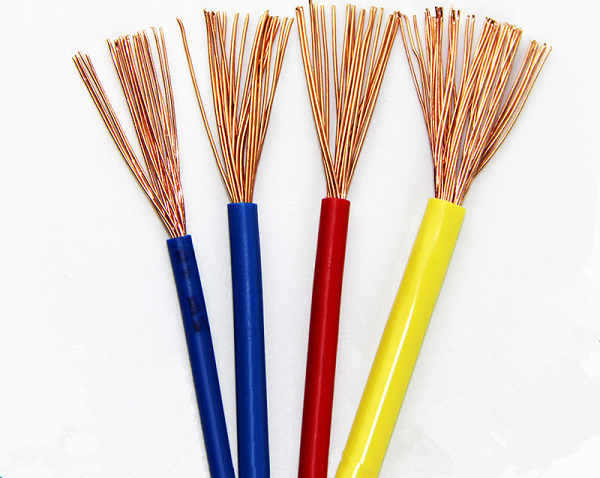
Low-voltage power distribution systems in civil buildings (380V/220V): Select cables with a rated voltage of 0.6/1kV; never replace them with weak current cables of 0.3/0.5kV.
Medium and high-voltage power distribution scenarios (10kV/35kV): Choose cables of 8.7/15kV or 26/35kV grade accordingly, and synchronously match the insulation coordination requirements of the system.
Scientific Calculation of Conductor Cross-Section
The cross-section selection must take into account three core indicators: current-carrying capacity, voltage drop, and mechanical strength, and cannot be estimated only by current-carrying capacity:
Current-carrying capacity: Select the cross-section based on the rated current of the load (including starting inrush current) and combined with the laying method (cable tray, direct burial, pipe threading, etc. methods have different heat dissipation efficiencies, so the current-carrying capacity needs to be corrected). For example, a 10mm² copper-core cable has a long-term current-carrying capacity of about 65A when laid in a cable tray, which needs to be reduced to around 50A when threaded through a pipe.
Voltage drop: The voltage drop at the end of a low-voltage system shall not exceed 5% of the rated voltage. For long-distance laying (e.g., over 100m), the cross-section needs to be increased. For example, for a 220V circuit with a length of 200m and a load current of 20A, a copper-core cable of 6mm² or above must be used to control the voltage drop.
Mechanical strength: The minimum cross-section of low-voltage cables shall not be less than 1.5mm² (copper core)/2.5mm² (aluminum core). For outdoor overhead or direct-buried cables, the cross-section needs to be further increased to resist external pulling forces.
Core Number Adapted to Scenarios
Three-phase power circuits: Select 3-core (three-phase) or 4-core (three-phase + neutral line); those with grounding protection need 5-core (three-phase + neutral line + ground wire).
Single-phase lighting/socket circuits: Select 2-core (live wire + neutral wire) or 3-core (plus ground wire).
Control circuits: Choose multi-core control cables (such as 4-core, 6-core, 10-core), with the number of cores matching the number of control points.
II. Material Selection: Ensuring Conductivity and Insulation Durability
Selection of Conductor MaterialCopper-core and aluminum-core conductors should be prioritized according to scenarios, with distinct differences between them.Copper core boasts advantages like high conductivity, strong corrosion resistance, stable joints and good mechanical strength, making it suitable for high-rise buildings, precision equipment, fire-fighting circuits and humid or corrosive environments. Though its cost is higher than aluminum core, it features a lower long-term failure rate.Aluminum core, on the other hand, is characterized by low cost and light weight, which makes it applicable to rural power grids, long-distance low-voltage overhead lines and non-critical power circuits. It should be noted that its joints need anti-oxidation treatment, and it is strictly prohibited to be used in scenarios with frequent vibration or a large number of joints.
Selection of Insulation and Sheath MaterialsThe insulation layer the cable's temperature resistance, corrosion resistance, and flame retardancy, while the sheath layer ensures mechanical protection. Precise selection based on scenarios is required:
Polyvinyl Chloride (PVC): Low cost, acid and alkali resistance, temperature resistance grade of 70℃, suitable for ordinary circuits in dry indoor environments without special flame retardant requirements. Disadvantage: Produces toxic when burned, not suitable for fire exits.
Cross-Linked Polyethylene (XLPE): Temperature resistance grade of 90℃ (can be increased to 125℃), excellent insulation performance, and aging resistance. It is suitable for high and low-voltage power circuits, direct burial/cable tray laying scenarios, and is currently the mainstream in industrial and civil fields.
Low Smoke Zero Halogen (LSZH): No halogenated toxic gas and low emission when burned, with strong flame retardant/fire-resistant performance. It is suitable for high-rise buildings, subways, hospitals, shopping malls and other densely populated fire key areas.
Armored Sheath: Adding steel tape/steel wire armor outside the insulation sheath can resist soil extrusion, rodent and ant gnawing, and external impact during direct burial, suitable for outdoor direct burial, tunnels, other scenarios with high risk of mechanical damage.
III. Scenario Adaptation: Targeted Resistance to Environmental Risks
Special Requirements for Laying Environment
Direct burial laying: Select steel tape armored XLPE insulated cables, and additional anti-corrosion treatment is required to avoid soil corrosion.
Cable tray/trunking laying: Unarmored cables can be selected when there is no risk of mechanical damage; fire-fighting circuits need to use flame-retardant/fire-resistant low- zero-halogen cables.
Humid/underwater environments: Choose waterproof armored cables (such as special cables for submersible motors), and the insulation sheath must have a waterproof cross-linked layer.
High-temperature environments (e.g., boiler rooms, metallurgical workshops): Select silicone rubber insulated cables with a temperature resistance of 125℃ or above.
Corrosive environments (e.g., chemical parks): Choose fluoroplastic insulated and sheathed cables to resist acid, alkali, and strong oxidant erosion.
Special Functional Requirements
Fire emergency circuits: Must select fire-resistant cables (marked with NH), which need to pass the fire resistance test of GB/T 19666 standard to ensure power supply for 1-3 hours in case of fire.
Anti-interference circuits (e.g., monitoring, communication linkage circuits): Choose shielded cables (copper mesh/aluminum foil shielding layer) to reduce electromagnetic interference.
Outdoor overhead: Select overhead insulated cables (JKLYJ type) with UV-resistant and wind erosion-resistant sheaths.
IV. Compliance and Brand Selection: Eliminating Non-Standard Hidden Dangers
Strictly Follow National Standards
Cables must comply with national standard requirements, with core standards including:
Low-voltage cables: GB/T 12706.1-2022 Power Cables with Extruded Insulation and Their Accessories for Rated Voltages from 1kV (Um=1.2kV) up to 35kV (Um=40.5kV);
Fire-resistant cables: GB/T 19666-2019 General Rules for Flame Retardant and Fire Resistant Electric Wires, Cables and Optical Fibre Cables;
At the same time, they must have 3C mandatory certification (low-voltage power distribution cables), flame retardant/fire-resistant grade test reports and other qualifications.
Choose Regular Brands and Channels
Non-standard cables often have problems such as "shrunk cross-section, insufficient insulation layer thickness, and high conductor impurities", which are prone to short-circuit fires. It is necessary to select products from qualified brand manufacturers, retain procurement contracts and test reports, and avoid purchasing inferior cables at low prices.
V. Later Supporting Facilities: Indirectly Ensuring Cable Durability
When selecting cables, supporting facilities should be considered synchronously, for example:
Cable joints and terminals must match the cable material and voltage level; prefabricated cold-shrink/heat-shrink joints are preferred to reduce joint failures.
The specifications of cable trays and conduits must be adapted to the outer diameter of the cable, ensuring that the bending radius during laying is not less than 10-15 times the outer diameter of the cable (larger for armored cables) to avoid insulation layer cracking.
Summary
The safety and durability of power cables are essentially the comprehensive result of "parameter matching + material adaptation + scenario protection + compliant selection". It is necessary to screen layer by layer from the dimensions of electrical load, laying environment, and safety standards, and cannot only consider cost as the sole factor.
我可以帮你把这份译
Related Articles More>>
- What are the common faults of power cables and how to prevent them? Power cable address will help you answer them
- Why Do Low-Voltage Cables Need to Avoid Lightning Strikes? An Important Line of Defense for Electrical Safety
- What is the reason for the large price difference of power cables? How to choose power cable procurement?
- International Customers Visit Tianjin Huben Cable Co., Ltd. on Eleventh Day of Lunar New Year Seeking Win-Win Cooperation
