


What is the reason for the large price difference of power cables? How to choose power cable procurement?
2025-12-12 From: Tianjin Huben Cable Co., Ltd. Browsing times:39
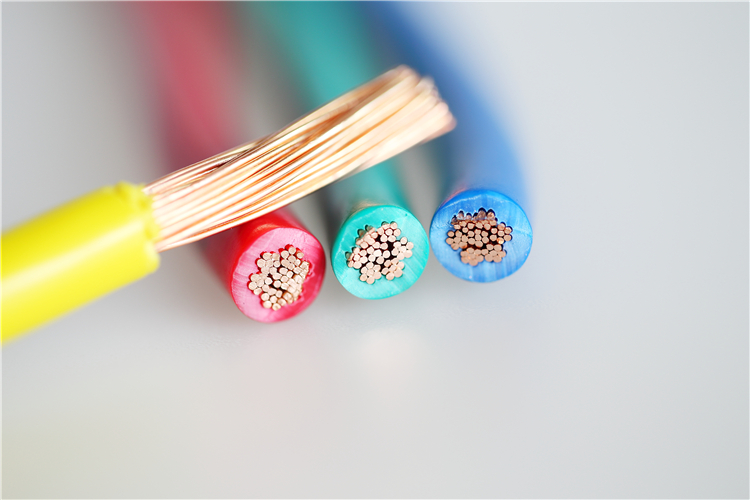
The price of power cables varies drastically, ranging from a few yuan per meter to several hundred yuan per meter. This disparity is not simply due to "brand premium" but is the combined result of multiple factors including raw material costs, technical specifications, production processes, quality standards, brand value, and market supply and demand. Below is a systematic analysis of the core influencing factors:
I. Differences in Raw Material Costs (Accounting for 50%-90% of Total Costs)
1. Conductor Material and Purity (The Most Core Factor)
Copper purity: National standard cables use oxygen-free copper (purity ≥99.95%), which has excellent conductivity and oxidation resistance. Non-standard products mostly use recycled or waste copper, which has high resistivity and is prone to overheating, with costs that can be reduced by 10% or more.
Material selection: The price of copper is 3-4 times that of aluminum. Aluminum-core cables are low-cost but have poor conductivity, suitable for non-critical circuits. Copper-core cables, with a resistivity of only 1.72×10⁻⁸Ω·m, have superior conductivity and are ideal for long-distance transmission or high-frequency signal circuits.
Copper price fluctuations: Copper accounts for 60%-80% of the total cable cost. Fluctuations in international copper prices directly affect cable pricing. Even cables of the same specification can see price changes of 5%-20% within a short period due to copper price volatility.
Aluminum core limitations: Although aluminum-core cables are cheaper, their mechanical strength and joint stability are inferior. Additional anti-oxidation treatment for joints increases auxiliary costs, narrowing the actual cost gap in some scenarios.
2. Insulation and Sheath Materials
Common materials: Polyvinyl chloride (PVC) is the most economical option, suitable for ordinary indoor dry environments. Cross-linked polyethylene (XLPE) has better heat resistance and aging resistance, with a cost that is 15%-30% higher than PVC.
Special materials: Low- zero-halogen (LSZH) materials, which produce no toxic fumes when burned, cost 2-3 times more than PVC and are mainly used in densely populated areas such as high-rises, subways, and hospitals. Fluoroplastic materials, resistant to strong corrosion and high temperatures, are even more expensive, targeting harsh environments like chemical plants.
Sheath thickness and quality: National standard cables have insulation and sheath thicknesses that meet safety requirements, while non-standard products often reduce thickness to cut costs, leading to lower prices but compromised durability.
3. Armored Layer Materials
Cables for direct burial or harsh mechanical environments require armored layers. Steel tape armor has a lower cost, while steel wire armor (for scenarios with strong tensile requirements such as underwater laying) increases costs by 20%-40% due to higher material and processing expenses.
II. Differences in Technical Specifications
1. Conductor Cross-Section
The larger the conductor cross-section, the more raw materials are used, and the higher the price. For example, the price per meter of a 120mm² copper-core cable is 3-5 times that of a 10mm² cable of the same type.
Non-standard cables often use "shrunk cross-sections" (actual cross-section smaller than the marked size), which can reduce material costs by 10%-30% but severely compromise current-carrying capacity and safety.
2. Rated Voltage Level
The higher the rated voltage, the stricter the requirements for insulation material performance and thickness. A 10kV medium-voltage cable is priced 5-10 times higher than a 0.6/1kV low-voltage cable of the same cross-section, due to more advanced insulation materials and manufacturing processes.
3. Core Number and Structure
Multi-core cables (such as 5-core power cables) cost more than single-core or 2-core cables of the same cross-section, as they require more complex stranding and insulation processes. Shielded cables (with copper mesh or aluminum foil shielding layers) also have a 20%-50% higher price due to additional shielding materials and processing steps.
III. Differences in Production Processes
1. Basic Processing Technology
Standard manufacturers use continuous extrusion for insulation and sheaths, ensuring uniform thickness and stable performance, with higher equipment and energy costs. Small factories may use intermittent extrusion, leading to uneven insulation and lower costs but poorer quality.
The stranding process of conductors: National standard cables use regular stranding with uniform pitch to reduce DC resistance, while non-standard products may use irregular stranding to save labor and time costs.
2. Special Process Requirements
Cross-linking treatment: XLPE cables require cross-linking processes (such as chemical cross-linking or irradiation cross-linking), which add equipment and process costs, making them more expensive than PVC cables.
Fire-resistant/retardant processes: Fire-resistant cables need to add fire-resistant layers or use special materials, with production costs increased by 30%-60% compared to ordinary cables, and prices rising accordingly.
Anti-corrosion and waterproof treatments: Cables for special environments require additional processes like sheath coating or waterproof cross-linking, further pushing up prices.
IV. Differences in Quality Standards and Certification
1. Compliance with National and Industry Standards
Cables that meet national standards (e.g., GB/T 12706 series) and have 3C mandatory certification undergo strict testing (such as insulation resistance, voltage withstand, and flame retardancy tests), with higher production and testing costs, and thus higher prices.
Non-standard or inferior cables bypass some tests, do not have formal certifications, and can be priced 20%-50% lower but have significant safety hazards.
2. Special Certification Requirements
Cables used in key fields (e.g., fire protection, nuclear power, railways) need to pass industry-specific certifications (such as fire-resistant grade certification, railway product certification). The additional testing and certification costs will increase the final price by 15%-40%.
V. Brand Value and After-Sales Service
1. Brand Premium
Well-known brands invest heavily in R&D, quality control, and brand building, with their products priced 10%-30% higher than ordinary brands. However, their products have stable quality and complete after-sales guarantees, reducing long-term maintenance costs for users.
Small or unknown brands rely on low prices to seize the market, but their product quality is unstable, and after-sales service is lacking.
2. After-Sales Service System
Branded manufacturers usually provide technical guidance, on-site debugging, and quality warranties (1-3 years or longer), while low-priced products often have no after-sales guarantees, which is a hidden factor in price differences.
VI. Market Supply and Demand and Regional Factors
1. Market Demand Fluctuations
During peak construction seasons (such as spring and autumn), the demand for cables surges, leading to tight supply and price increases of 5%-15%. In off-seasons, manufacturers may reduce prices to clear inventory.
2. Regional Differences
In regions with concentrated cable production (e.g., Jiangsu, Zhejiang, Guangdong), due to scale effects and sufficient supply, prices are relatively low. In remote regions, transportation costs increase the final selling price by 5%-20%.
3. Batch Purchase Volume
Large-scale bulk purchases by construction projects or power companies can get discounts of 5%-15%, while small-batch retail prices are higher, resulting in price differences for the same product.
Summary
The price differences of power cables are the result of the comprehensive interaction of raw materials, technology, quality, brand, and market factors. Low-priced cables often cut corners in materials or processes, while high-priced cables guarantee performance and safety through strict quality control and advanced technologies. When selecting cables, users should not only focus on the initial price but also consider the comprehensive cost of long-term safety and durability.
I can help you create an English comparison table of cost components for different types of power cables for easier procurement reference, do you need it?
Related Articles More>>
- Why Do Low-Voltage Cables Need to Avoid Lightning Strikes? An Important Line of Defense for Electrical Safety
- What are the common faults of power cables and how to prevent them? Power cable address will help you answer them
- How to choose power cables to ensure safety and durability,Power cable manufacturers will give you answers
- Overseas Customers Visit Tianjin Huben Cable Co., Ltd. on Eighth Day of Lunar New Year for Business Cooperation
