What Key Details Need to Be Noticed During the Installation of High-Voltage Cables? Avoid These Pitfalls to Ensure Power Supply Safety!high-voltage cable
2025-12-26
From: Tianjin Huben Cable Co., Ltd.
Browsing times:179
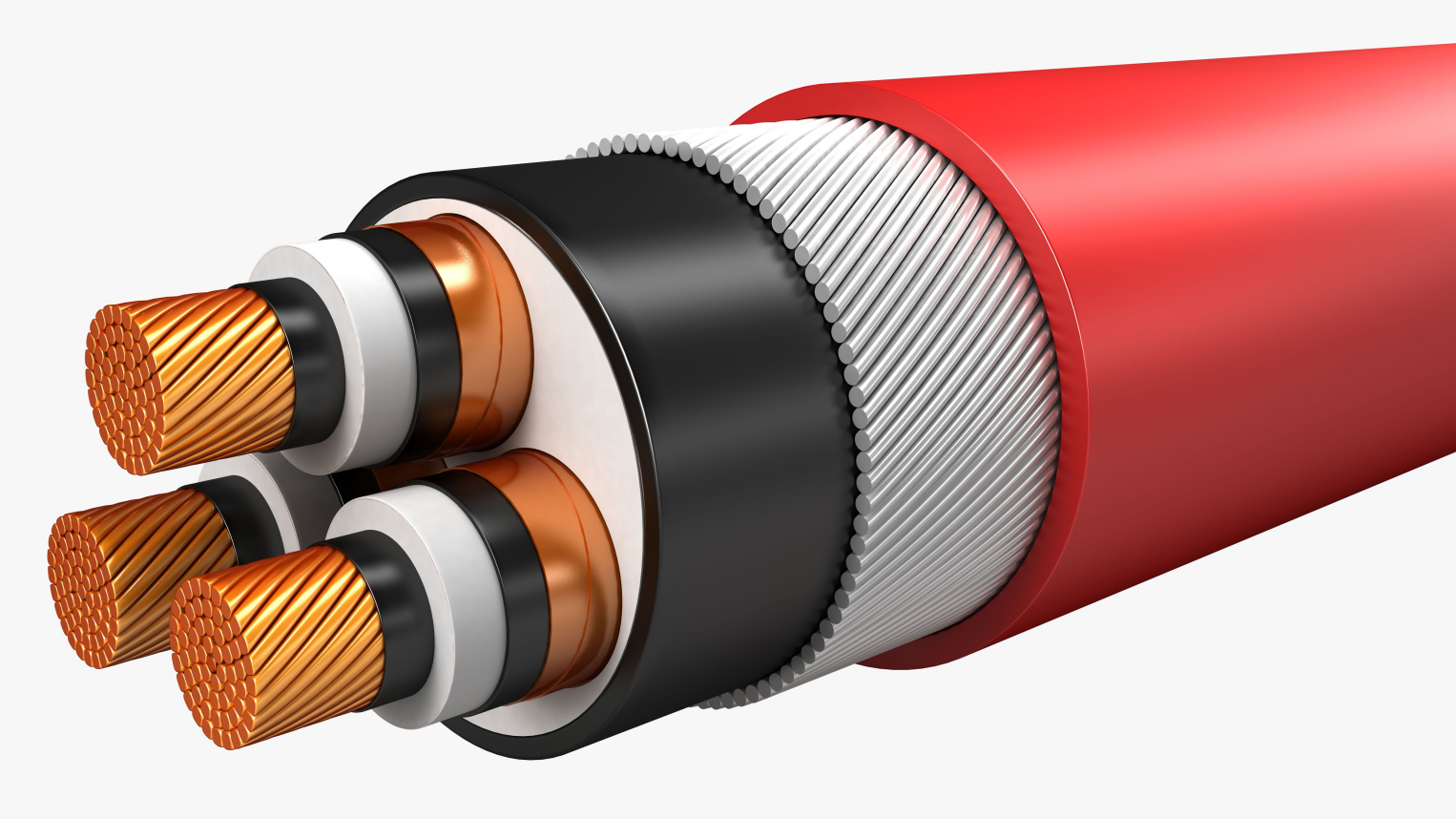
The installation of high-voltage cables is not as simple as "direct laying". Sufficient preliminary preparation is the premise of ensuring installation quality, focusing on the following details:
Before installation, a comprehensive inspection of high-voltage cables, joints, terminal heads, clamps and other accessories must be carried out:
Verify whether the cable model and specifications (such as cross-section, voltage level) are consistent with the design scheme to avoid low-level mistakes such as using 10kV cables instead of 35kV cables;
Check whether the cable appearance has damage, insulation layer scratches, armor layer deformation and other problems, and whether the seals at both ends of the cable are intact to prevent moisture from entering the insulation layer;
Check the factory qualification certificates and test reports of accessories to ensure that joints and terminal heads are original supporting products, and prohibit the use of non-standard and inferior accessories.
Refine the construction plan in combination with the on-site environment (such as direct burial, pipe threading, bridge laying), and clarify key parameters such as laying path, curvature radius at corners, and fixed spacing;
Survey the laying path, clear underground obstacles (such as stones, sharp metals), and confirm the distribution of underground pipelines for direct burial laying to avoid cross-conflicts with other pipelines;
Conduct technical disclosure for construction personnel, clarify the national standard requirements for high-voltage cable installation (such as GB 50168-2018 "Code for Construction and Acceptance of Cable Lines of Electrical Installation Engineering"), and put an end to irregular operations.
Prepare special construction tools, such as cable pay-off racks, hydraulic pliers, insulation stripping tools, megohmmeters (shake meters), etc. The tools must pass insulation testing to avoid using damaged and aging tools;
Equip with safety protective equipment such as insulating gloves, insulating boots, and voltage testers, and set up warning signs in the construction area to prevent irrelevant personnel from entering.
Mechanical damage and excessive bending are the main causes of later failures during high-voltage cable laying, and the following details need to be focused on:
The traction force during high-voltage cable laying shall not exceed the allowable value of the cable (e.g., the traction force of copper core cable ≤ 300N/mm²) to avoid conductor deformation and insulation layer cracking due to excessive tension;
When adopting mechanical laying, a protective sleeve shall be installed at the cable traction head, and the traction force shall act on the armor layer or metal sheath. It is forbidden to directly pull the cable insulation layer;
When multiple people cooperate in laying, keep the speed uniform to avoid sudden stress or jamming of the cable.
The curvature radius of the cable when bending directly affects the integrity of the insulation layer, and there are clear standards for different laying methods:
For high-voltage cables of 10kV and below, the bending radius shall not be less than 15 times the outer diameter of the cable; for 35kV cables, it shall not be less than 20 times;
Sufficient space shall be reserved in advance for cables at bridge corners and pipe threading places. Forced bending is prohibited to avoid micro-cracks inside the insulation layer.
For direct burial laying, a 100mm thick layer of fine sand or soft soil shall be laid under the cable, and bricks or concrete slabs shall be covered above for protection. The backfill soil shall not contain stones and sharp debris;
For pipe threading laying, the inner diameter of the pipe shall not be less than 1.5 times the outer diameter of the cable, and the pipe orifice shall be chamfered to prevent scratching the cable sheath;
For bridge laying, the fixed spacing of cables shall meet the requirements (horizontal laying ≤ 1.5m, vertical laying ≤ 2m), and the fixed clamps shall be adapted to the outer diameter of the cable to avoid extrusion damage to the insulation layer.
During laying, the two ends of the cable shall be sealed with sealing caps before installing joints, and open-air laying in rainy and foggy days is prohibited;
If the surface of the cable insulation layer is contaminated with oil and soil, it shall be wiped clean with a dry cloth in time to avoid insulation performance degradation caused by pollution.
High-voltage cable joints and terminal heads are weak points of insulation, and about 70% of cable failures are caused by improper joint treatment. The following details need to be focused on:
Use special stripping tools to strip the outer sheath, armor layer, inner sheath and semi-conductive layer layer by layer. It is forbidden to cut randomly with a knife to avoid damaging the main insulation layer;
When stripping the semi-conductive layer, ensure that the cut is flat, and there are no burrs at the transition with the main insulation layer to prevent electric field concentration and partial discharge.
Joint installation shall be carried out in a dry and clean environment, and a temporary protective shed shall be built at the construction site to prevent dust and moisture from entering the joint;
Install joint accessories layer by layer in accordance with the manufacturer's instructions, control the filling amount of insulating glue and sealant, and ensure that there are no bubbles and gaps inside the joint;
When crimping copper (aluminum) connecting pipes, the crimping sequence and depth shall meet the requirements. After crimping, remove surface burrs to ensure good contact.
Outdoor terminal heads shall be equipped with rain skirts, and the sealing part shall be tightly wrapped with waterproof tape to ensure that the waterproof grade meets IP54 and above standards;
When fixing the terminal head, avoid uneven stress leading to insulation layer cracking. When connecting with electrical equipment, ensure that the wiring terminals are in close contact without loosening.
After the cable installation is completed, it must pass strict testing before commissioning. The key testing details are as follows:
Use a megohmmeter to measure the cable insulation resistance. The insulation resistance value of 10kV cables shall not be lower than 1000MΩ, and that of 35kV cables shall not be lower than 2500MΩ;
Before the test, the cable shall be grounded and discharged to avoid residual charges affecting the test results, and grounded and discharged again after the test to ensure personnel safety.
Carry out DC withstand voltage test in accordance with national standards. The test voltage is 3-5 times the rated voltage of the cable, lasting for 15 minutes. During the period, no breakdown and no obvious fluctuation of leakage current are qualified;
Monitor the leakage current in real time during the test. If the current suddenly increases, stop the test immediately and check whether there are defects in the insulation layer.
Re-inspect whether the cable laying path, fixed spacing and bending radius meet the requirements, and whether the joints and terminal heads are installed firmly and the seals are intact;
Sort out construction records and test reports, form complete acceptance data, and file for future reference.


