


Is the Thicker the Insulation Layer of PV Cables, the Better? The Answer Is Not Absolute
2025-12-26 From: Tianjin Huben Cable Co., Ltd. Browsing times:57
In the construction of photovoltaic (PV) power plants, cables, as the core carrier of power transmission, their performance directly affects the safe and stable operation and service life of the power plant. PV cables are long-term exposed outdoors and need to withstand harsh environments such as ultraviolet radiation, alternating high and low temperatures, wind and rain erosion. As the "protective barrier" of cables, the insulation layer thickness has become the focus of many constructors and owners. Many people have a misunderstanding that the thicker the insulation layer, the better the protective performance and the higher the safety. In fact, the insulation layer thickness of PV cables is not the thicker the better. It needs to be comprehensively determined based on various factors such as material, service environment, and current-carrying demand. Excessive thickening may instead cause a series of problems. This article will deeply analyze the core role of the insulation layer of PV cables, disassemble the disadvantages of excessive thickness, clarify the basis for selecting a reasonable thickness, and provide practical references for material selection in PV power plant construction.
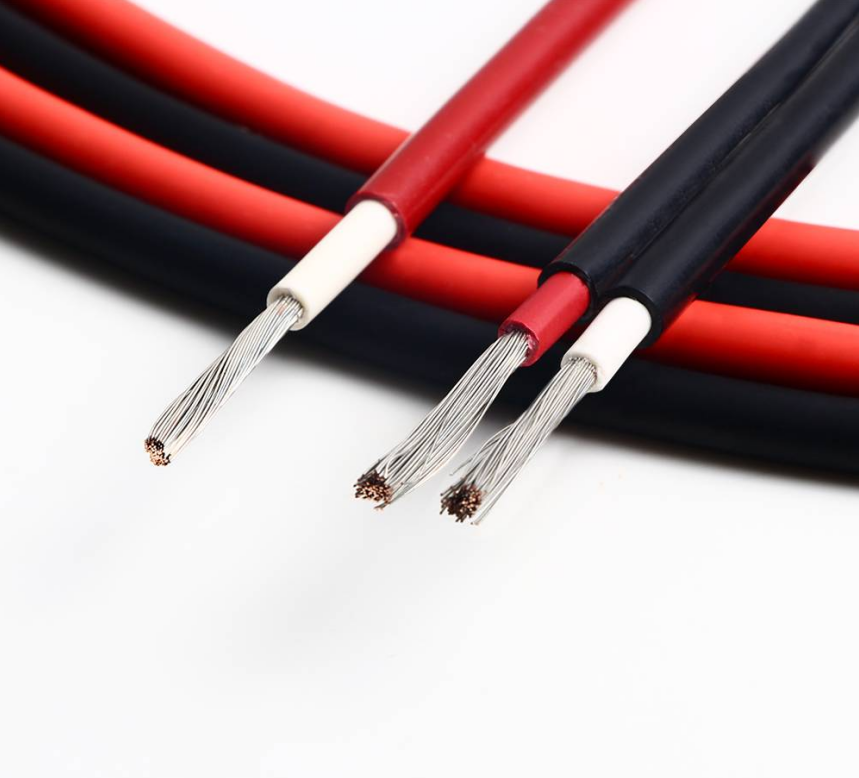
I. First, Clarify: The Core Role of PV Cable Insulation Layer
The core mission of the PV cable insulation layer is to achieve conductor insulation, prevent faults such as current leakage and short circuits, and at the same time resist the erosion of harsh outdoor environments, ensuring the safety and stability of power transmission. The specific roles are reflected in three aspects: first, electrical insulation, isolating the current conduction between the conductor and the outside world and between different conductors, avoiding equipment damage or fire accidents caused by leakage and short circuits; second, environmental protection, resisting the erosion of outdoor environments such as ultraviolet rays, ozone, high and low temperatures (-40℃ to 90℃), rain and snow, sand and dust, delaying cable aging and extending service life; third, mechanical protection, preventing the cable from being subjected to mechanical damage such as extrusion, friction, and collision during laying and operation and maintenance, and protecting the integrity of the internal conductor.
Based on these roles, the insulation layer thickness needs to meet the basic protection requirements, but this does not mean that the thicker the better. There are clear standard requirements for the insulation layer thickness of PV cables in the industry, such as the national standard GB/T 12706.1-2022 and the international standard IEC 60228. All specify the minimum insulation thickness according to parameters such as cable cross-sectional specifications and rated voltage to ensure basic protection performance.
II. Key Analysis: Three Major Disadvantages of Excessively Thick Insulation Layer
Blindly increasing the insulation layer thickness of PV cables cannot improve the protection effect, but will bring problems in cost, performance, construction and other aspects, violating the construction principle of "high efficiency, economy and reliability" of PV power plants.
1. Increase Cable Cost and Construction Investment
The insulation layer of PV cables is mostly made of special materials with excellent weather resistance, such as cross-linked polyethylene (XLPE) and polyvinyl chloride (PVC). The cost of these materials accounts for a certain proportion of the total cable cost. The increase in insulation layer thickness will inevitably lead to an increase in raw material consumption, directly increasing the production and manufacturing cost of cables. For large-scale PV power plants, the cable usage can reach tens of thousands of kilometers. Excessively thickening the insulation layer will significantly increase the cable procurement cost, thereby pushing up the construction investment of the entire power plant and reducing the project investment return rate.
2. Affect Heat Dissipation Performance and Reduce Current-Carrying Capacity
During the operation of PV cables, heat will be generated due to conductor resistance. This heat needs to be dissipated in time to ensure the normal operation of the cables. The insulation layer is a thermal insulator. Excessively thick insulation layer will hinder heat transfer, resulting in a significant decrease in cable heat dissipation efficiency. Excessive heat accumulation will increase the conductor temperature of the cable. According to the characteristics of cable current-carrying capacity, the increase in temperature will significantly reduce the cable's current-carrying capacity, which cannot meet the power transmission demand of PV modules. In severe cases, it will also accelerate the aging of the insulation layer, shorten the service life of the cable, and increase the risk of failure.
3. Reduce Construction Convenience and Increase Laying Difficulty
Thickening the insulation layer will increase the outer diameter of the cable and reduce flexibility, bringing many inconveniences to the cable laying construction of PV power plants. On the one hand, after the cable outer diameter increases, larger specifications of cable trays, conduits and other supporting facilities are required, further increasing the construction cost; on the other hand, the decrease in flexibility will increase the difficulty of cable bending, making the laying operation in narrow spaces such as under PV modules and between brackets difficult. This not only reduces construction efficiency, but also may cause cracks in the insulation layer during bending, leaving potential safety hazards instead.
III. Scientific Selection: Basis for Determining the Reasonable Thickness of PV Cable Insulation Layer
The selection of PV cable insulation layer thickness is centered on "standard requirements and adapting to the service environment", rather than blindly pursuing thickening. Specifically, it can be comprehensively determined from the following three dimensions:
1. Strictly Follow Industry Standards to Ensure Basic Performance
When selecting cables, priority should be given to products that meet national and international standards to ensure that the insulation layer thickness is not lower than the minimum thickness specified by the standards. For example, for PV cables with a rated voltage of 1kV, there are clear requirements for the minimum insulation thickness corresponding to different cross-sectional specifications (such as the minimum insulation thickness of 1.5mm² cables is 0.7mm, and that of 2.5mm² cables is 0.8mm). Cables that meet the standards have undergone strict performance tests on their insulation layer thickness, which can meet the protection requirements of conventional outdoor PV scenarios.
2. Appropriately Adjust According to the Service Environment
In special harsh environments, the insulation layer thickness can be appropriately increased on the basis of the standard, but it must be controlled within a reasonable range. For example, in desert PV power plants with high ultraviolet radiation, strong sandstorms, and large temperature differences, or PV power plants near the sea with high salt spray concentration, cables with insulation layer thickness slightly higher than the standard value can be selected to improve environmental resistance; in conventional outdoor environments, cables with standard thickness can meet the requirements without additional thickening.
3. Match Current-Carrying Demand and Balance Heat Dissipation and Protection
The insulation layer thickness of the cable needs to match the conductor cross-section and current-carrying demand. For cables corresponding to high-power PV modules, if the current-carrying demand is high, priority should be given to ensuring a sufficient conductor cross-section, and at the same time, the insulation layer thickness should be controlled to avoid affecting the current-carrying capacity due to poor heat dissipation. Professional cable current-carrying capacity calculation software can be used to determine the optimal combination of insulation layer thickness and conductor cross-section based on parameters such as the actual power output of the power plant and the laying method (such as direct burial, cable tray laying).
Related Articles More>>
- How to Prevent Corrosion of PV Cables in Humid Environments? Practical Protection Guide
- Why Do Low-Voltage Cables Need to Avoid Squeezing? Key Details Related to Electrical Safety
- Will PV Cables Become Brittle in Low-Temperature Environments? Complete Analysis of Answers and Solutions
- Why Is the Cross-Sectional Area of Low-Voltage Cables Important? Related to Electrical Safety and Efficiency
